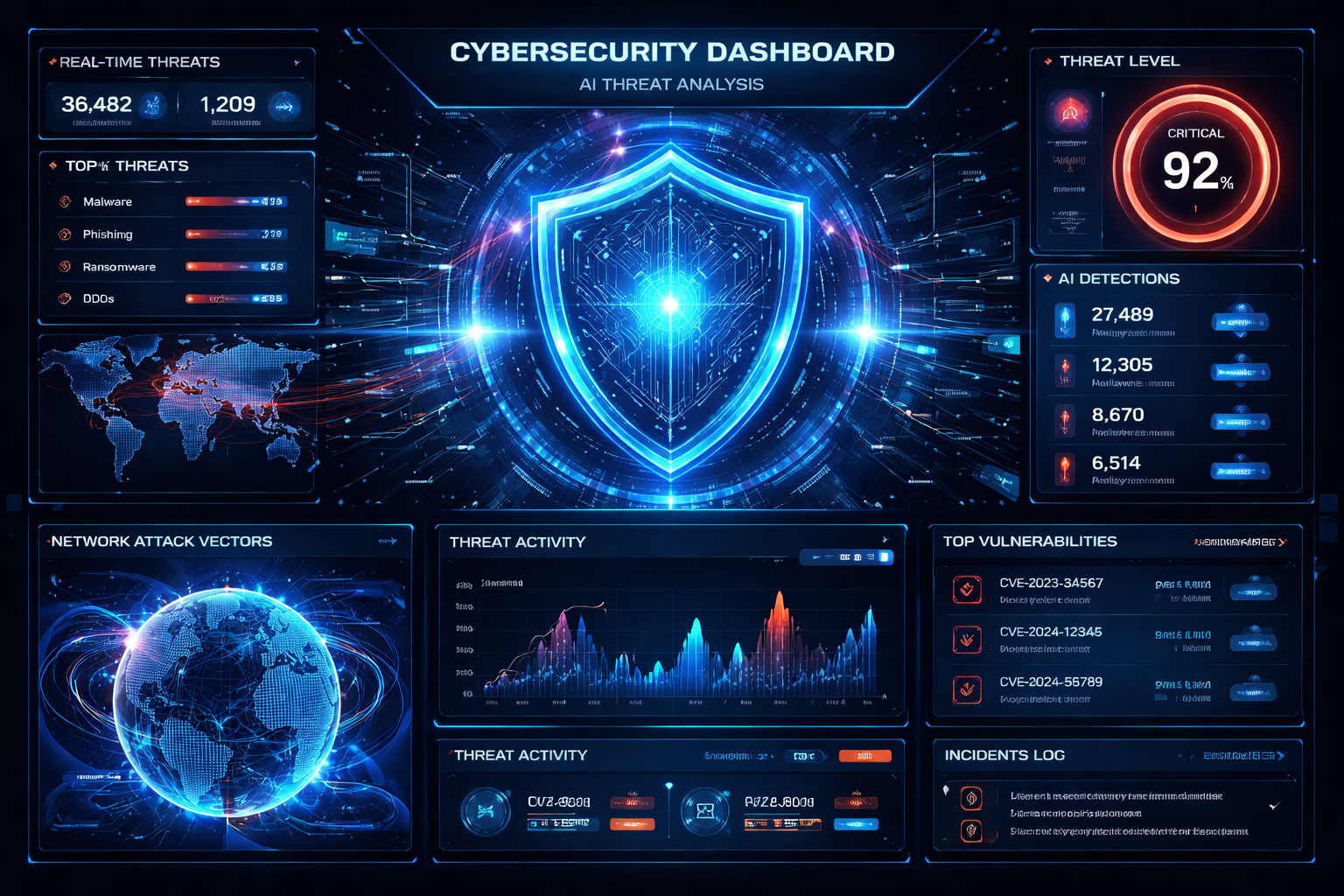
As digital transformation accelerates, cybersecurity in 2026 has become a strategic business priority — not just a technical necessity. Cyber attacks have grown in sophistication, frequency, and impact as cybercriminals harness artificial intelligence (AI), automation, and deception techniques to overwhelm traditional defenses.
1. AI-Powered Cyber Attacks
AI isn’t just for defenders anymore — attackers use AI to generate highly adaptive malware, automate phishing campaigns, and perform real-time reconnaissance across networks. These threats can mutate to evade common detection tools, shortening the window defenders have to respond.
2. Deepfake & Identity Manipulation
Deepfake technology — realistic AI-generated audio and video — is now used to impersonate leaders and staff to trick employees into divulging secrets or authorizing fraudulent actions. Researchers warn that this trend erodes trust in digital communication.
3. Cloud & Configuration Vulnerabilities
As more organizations adopt cloud services, misconfigurations remain a major risk. Poor identity controls, exposed storage, and insecure API integrations provide entry points for attackers, even when core platforms themselves are secure.
4. Phishing and Social Engineering
Phishing remains one of the most effective attack vectors because it targets employees rather than systems. In 2026, phishing uses sophisticated AI-generated text and social cues that make fraudulent messages hard to distinguish from real ones.
📌 How to Defend Against These Threats
✔ Zero Trust Security — Never trust by default and always verify access credentials.
✔ AI-Driven Detection — Deploy AI that learns behavior patterns to flag anomalies at speed.
✔ Cloud Security Posture Management — Continuously monitor configurations, access, and permissions.
✔ Employee Training — Teach staff to spot deepfake and AI-enhanced phishing attempts.
Conclusion: In 2026, cybersecurity isn’t just about tools — it’s about intelligence, automation, and strategic defense systems that evolve as threats evolve.