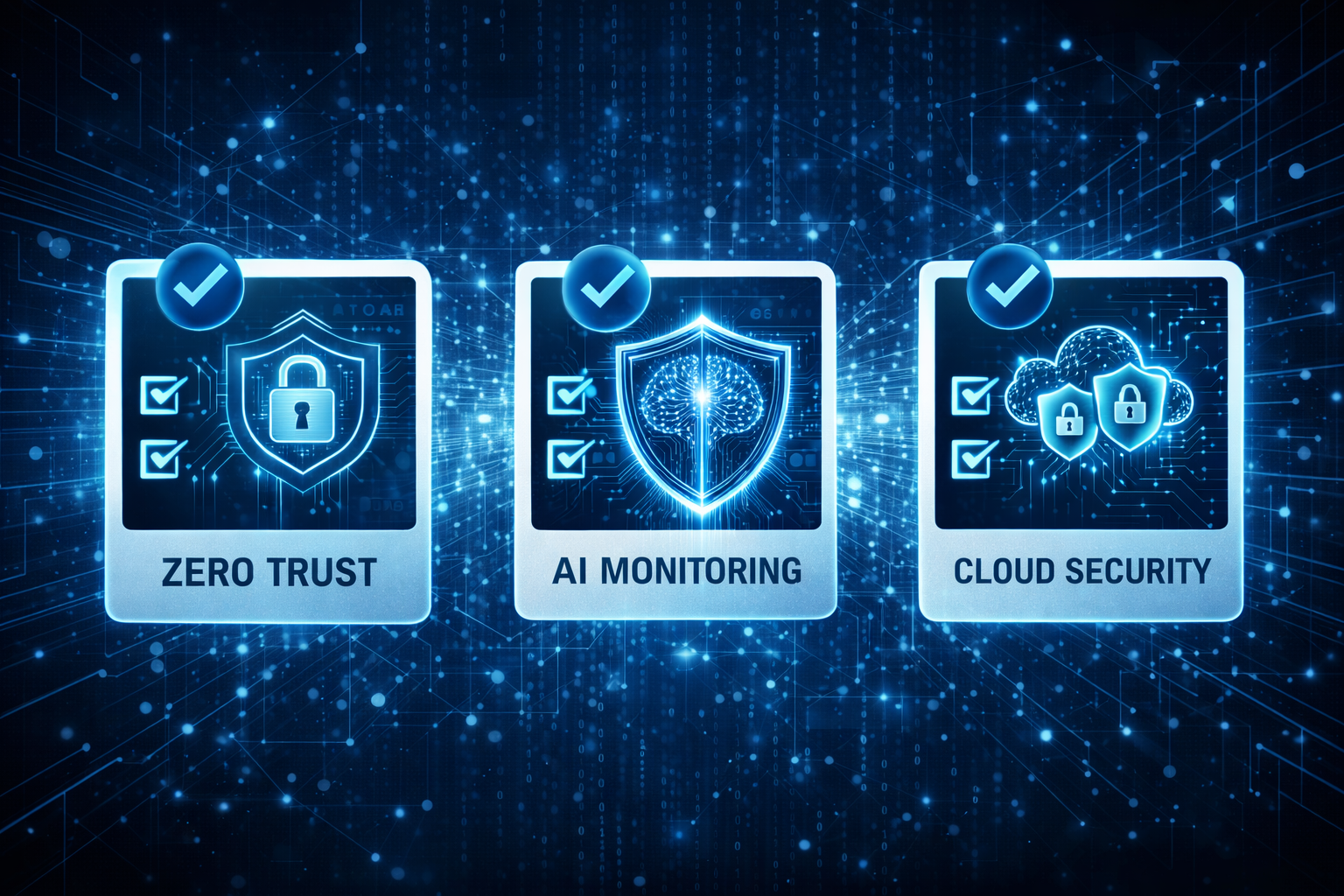
As threats become more automated and adaptive in 2026, organizations must adopt layered defense strategies that go beyond basic firewalls.
1. Zero Trust Architecture
Rather than trusting internal traffic by default, Zero Trust continuously verifies every user and device request — reducing unauthorized access.
2. Secure Perimeters Beyond Firewalls
Remote work, cloud services, and IoT devices have extended the attack surface. Organizations must secure:
-
Network borders
-
IoT connections
-
Cloud workloads
Using screen-segmented networks and least-privilege access strategies.
3. People-Centric Security
Human error remains one of the biggest risks — up to three-quarters of breaches involve a human element. This makes:
-
Employee awareness training
-
Phishing simulations
-
Credential hygiene
critical parts of defense.
4. Continuous Patch and Update Policies
Outdated software is a major vulnerability — nearly a third of cyberattacks exploit unpatched systems. Organizations must automate updates and vulnerability scanning.
📌 Smart Strategy for 2026
✔ Combine AI-enabled tools with human training.
✔ Use zero trust as a foundation.
✔ Monitoring must be continuous, not periodic.
Conclusion: Cybersecurity is no longer a checkbox — it’s a continuous, proactive strategy.